
- Navigating the Power Spectrum of Fibre Lasers: 300W vs 450W
- Understanding Fibre Laser Power Levels
- The Role of Power in Laser Performance
- Why Power Levels Matter
- 300W Fibre Lasers: Applications and Benefits
- Ideal Use Cases for 300W Lasers
- Precision and Energy Efficiency
- 450W Fibre Lasers: High-Efficiency Solutions
- Handling Robust Materials
- Enhancing Production Speed
- Comparing Material Thickness Handling
- Material Thickness: 300W vs 450W
- Impacts on Cutting Speed and Quality
- Efficiency and Cost-Effectiveness in Production
- Cost-Effective Solutions for Various Scales
- Efficiency in High-Volume Production
- Technological Advancements in Fibre Lasers
- Latest Developments in Laser Technology
- Reliability and Quality Improvements
- Choosing the Right Power Level for Your Application
- Assessing Project Demands
- Making the Optimal Choice
- Conclusion: Choosing the Right Fibre Laser Power Level
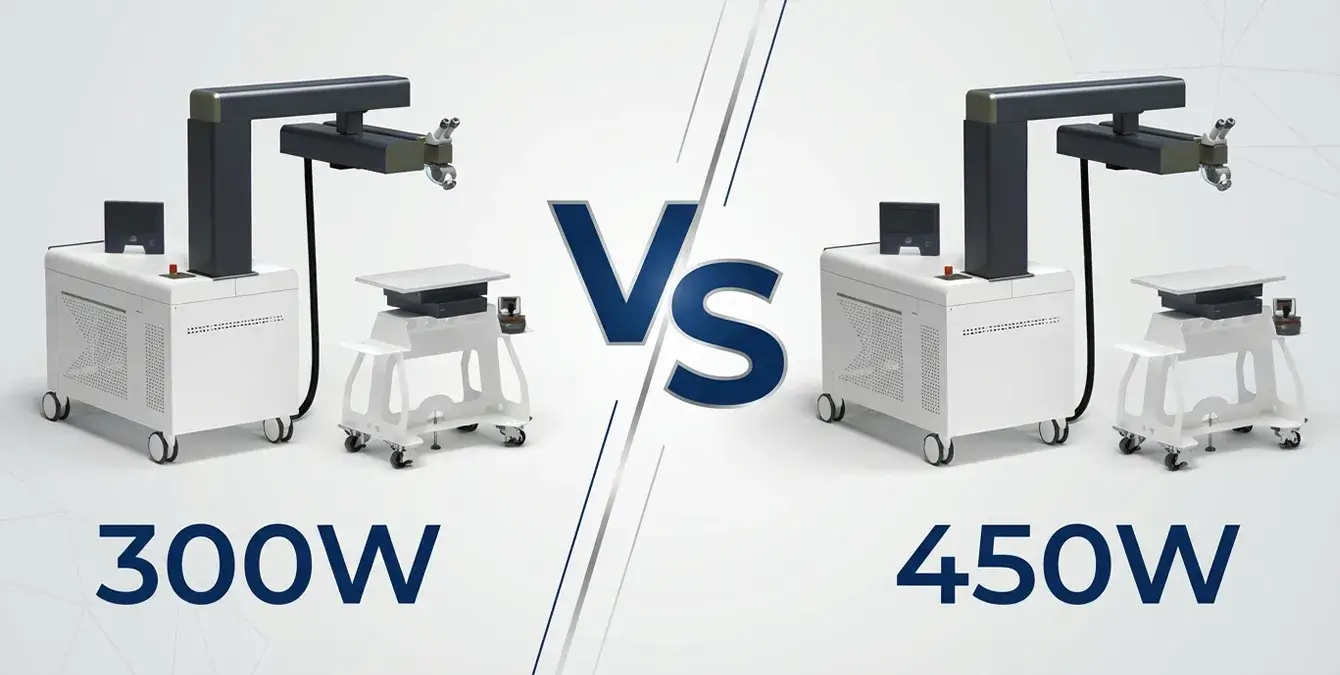
Navigating the Power Spectrum of Fibre Lasers: 300W vs 450W
Choosing the correct wattage for your fibre laser can significantly influence the efficiency and effectiveness of your industrial applications. The debate between employing a 300W vs 450W fibre laser revolves around more than just numbers; it’s about aligning power capabilities with material requirements and production goals.
The laser industry offers diverse solutions, but determining the best fit for your operations requires a strategic understanding of power levels and their applications. A 300W laser is perfect for tackling lighter materials and small-scale projects, offering precision without unnecessary energy expenditure. On the other hand, a 450W laser is designed for robust tasks, seamlessly cutting through thicker materials and boosting production speed in high-volume environments.
In a world where production efficiency dictates market competitiveness, understanding how power levels differentially affect material processing is crucial. Opting for a 450W fibre laser means embracing higher efficiency, ensuring quicker output and cost-effectiveness in large-scale operations. Meanwhile, a 300W laser’s nuanced approach provides an affordable option ideal for precision work and smaller workloads.
As fibre laser technology advances, both models offer state-of-the-art features that enhance reliability and cutting quality. When weighing the choice between 300W and 450W, professionals must consider the specific needs of their projects, from material thickness to desired precision.
Exploring the capabilities of these lasers will illuminate the best wattage selection tailored to your industrial requirements. Understanding the nuances of fibre laser power levels ensures that decision-makers can optimize their operations efficiently. Let’s delve deeper into how these power distinctions and technological advancements translate into practical industrial applications, guiding you to the right choice for your needs.
The decision between a 300W and 450W fibre laser is integral for professionals seeking to optimize their laser applications. Below, we present the key takeaways to guide your selection process, focusing on the power levels and their advantages.
- Power Differentiation Enhances Application Suitability: A 300W laser is ideal for lighter materials and smaller scale jobs, while the 450W laser suits heavier materials and high-volume production, providing variable options for different requirements.
- Material Thickness Influences Power Choice: The 300W laser is effective for cutting thinner materials like plastics and metals, whereas the 450W handles thicker, more robust materials efficiently, impacting overall performance and speed.
- Efficiency Drives Production Outcomes: The efficiency of a 450W fibre laser boosts production speed and output for demanding industrial tasks, providing a cost-effective solution when processing large quantities.
- Cost-Effectiveness Depends on Application Scale: For large-scale operations, 450W lasers offer higher throughput and reduced operational costs per unit, whereas 300W lasers provide substantial savings for smaller-scale and detailed tasks.
- Wattage Selection Tailors to Industrial Needs: Deciding on the best wattage level involves evaluating the project’s scope, material characteristics, and desired precision, ensuring an optimal match for workflow demands.
- Technological Advancements in Fibre Lasers: The evolution in fibre laser technology presents enhanced capabilities for both 300W and 450W models, offering improved reliability and quality in laser cutting applications.
The insights into 300W vs 450W fibre lasers reveal a detailed perspective on power levels, material handling capabilities, and efficiency considerations. As we delve further, we’ll explore how these factors translate into practical industrial applications, guiding you to the right power level for your needs.
Understanding Fibre Laser Power Levels
The Role of Power in Laser Performance
Fibre laser power levels play a crucial role in determining the performance capabilities of your laser system. When comparing 300W vs 450W fibre lasers, it’s important to note how different wattages can influence cutting speed, material thickness, and overall production efficiency. A higher power level generally provides enhanced cutting capabilities, allowing for the processing of thicker materials at faster speeds.
The application of fibre laser technology can vary significantly based on the wattage chosen. For instance, a 300W laser might be suitable for less demanding applications, where precision and finesse are prioritized over speed. Conversely, a 450W fibre laser is often preferred for more industrial settings where productivity is key.
Why Power Levels Matter
Choosing the correct fibre laser power level is essential not only for operational efficiency but also for managing production costs. The decision between a 300W and a 450W laser depends on several factors, including the intended application, the types of materials involved, and the desired production speed.
Understanding laser material thickness capabilities is vital. A 450W laser offers advantages in cutting thicker materials, maintaining speed without sacrificing quality. However, if the majority of your work involves thinner materials, a 300W laser can provide sufficient power while potentially reducing operating costs.
Ultimately, the best wattage for fibre laser cutting should align with your specific operational needs, balancing efficiency and cost-effectiveness. By analyzing fibre laser power levels concerning your workflow, you can make an informed decision that supports your production goals.
300W Fibre Lasers: Applications and Benefits
Ideal Use Cases for 300W Lasers
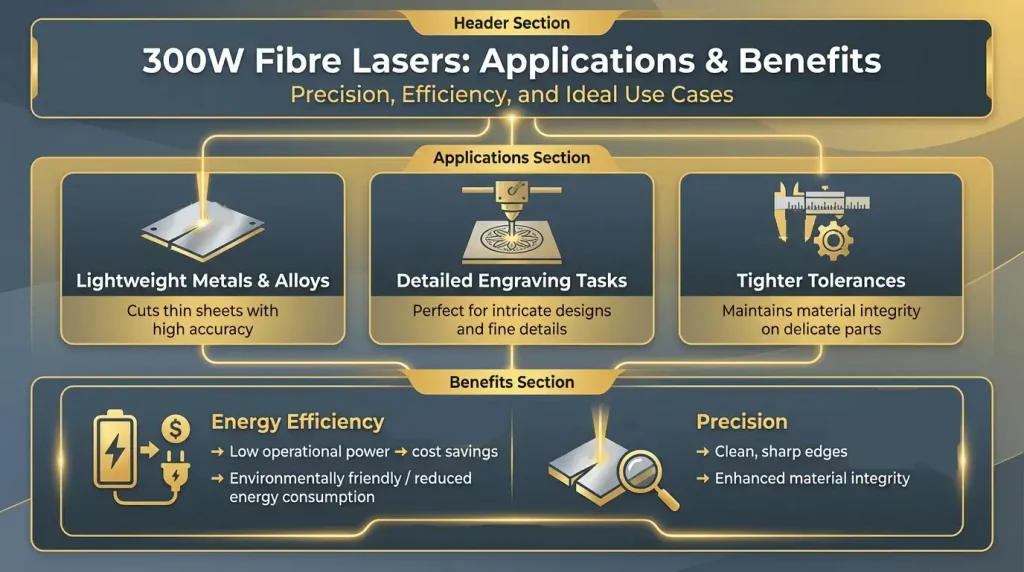
When considering 300W vs 450W fibre laser options, it’s essential to understand where the 300W fibre laser shines. These lasers are most effective for light to medium material cutting, where precision is critical. Industries that frequently work with thin metals and detailed parts, such as electronics and fine jewelry manufacturing, benefit significantly from this power level.
The 300W laser applications encompass delicate tasks that require high accuracy. This wattage is particularly suited for situations where material integrity cannot be compromised. From cutting intricate patterns in thin sheets to engraving detailed designs, the 300W fibre laser provides the necessary finesse.
Precision and Energy Efficiency
A significant advantage of using a 300W fibre laser is its energy efficiency, which can lead to cost savings over time. These lasers require less power, thereby reducing operational costs while maintaining high precision in cuts. This efficiency is particularly attractive to companies looking to minimize their environmental impact and reduce energy consumption.
When assessing laser material thickness, a 300W laser can effectively manage materials up to certain thicknesses without sacrificing quality. While it may not handle extremely thick materials as efficiently as higher wattages, it excels in providing clean, sharp edges on thinner substrates.
- Perfect for lightweight metals and alloys
- Ideal for detailed engraving tasks
- Suits applications with tighter tolerances
Understanding how much material a 300W laser can cut is crucial for industries focused on detail accuracy and energy savings. Although a 450W laser provides more brute force, the precision and lowered energy requirements of a 300W fibre laser make it a compelling choice for specific tasks.
450W Fibre Lasers: High-Efficiency Solutions
Handling Robust Materials
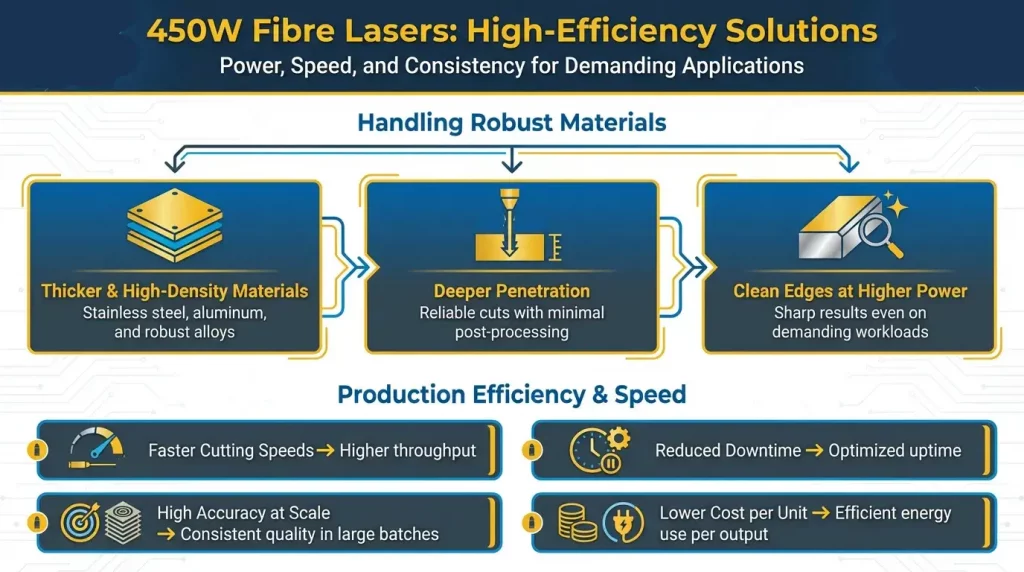
When it comes to processing robust and thicker materials, the power of a 450W fibre laser cannot be overstated. Such lasers are engineered to handle high-density materials, offering unmatched performance in terms of cutting speed and precision. Whether working with metals like stainless steel or aluminum, a 450W laser ensures that cuts are clean and edges are sharp, reducing the need for post-processing.
This power level is ideal for industries that deal with materials requiring deeper penetration and superior cutting quality. Engineers and production managers looking for reliable solutions to address heavy-duty fabrication needs will find 450W lasers indispensable. The increased capabilities of this power level mean that industrial applications can benefit from more consistent and higher-quality outputs, optimizing overall efficiency.
Enhancing Production Speed
The efficiency of a 450W laser stands out particularly in large-scale production environments. The increased wattage translates into faster cutting speeds, which directly boosts productivity. For manufacturing units aiming to scale up their production without compromising on precision, a 450W fibre laser can be a game-changer.
In addition, the best wattage for fibre laser cutting often depends on the balance between speed and quality. Here, the 450W option excels by maintaining high accuracy while allowing for significant uptime reductions. This means less downtime and more throughput, contributing to a more cost-effective operation. Professionals can expect reduced energy consumption per unit, which further enhances the cost savings associated with this laser type.
Ultimately, when considering the question how to choose the right fibre laser wattage, the advantages of investing in a 450W laser become clear. This power level offers top-tier efficiency for both intricate and large-scale applications. Thus, businesses looking to optimize their production processes can leverage the improved capabilities of 450W lasers to meet their operational goals effectively.
Comparing Material Thickness Handling
Material Thickness: 300W vs 450W
When comparing the 300W vs 450W fibre laser, understanding their material thickness handling capabilities is crucial. The 300W fibre laser is often suitable for cutting thinner materials, typically up to 5mm in thickness. Its ability to provide precise cuts at a more affordable energy consumption rate makes it ideal for industries focused on detail-oriented tasks, like engraving or cutting lightweight materials.
Conversely, the 450W fibre laser excels in processing thicker materials. It can handle materials up to 8mm effectively, ensuring clean and efficient cuts. This makes it advantageous for operations requiring deeper penetration, such as in heavy-duty manufacturing sectors. For more insights, explore our in-depth analysis on fiber laser technology.
Impacts on Cutting Speed and Quality
The power level of a fibre laser directly influences both cutting speed and quality. When using a 300W laser, the cutting process might be slower due to its lower energy output, but this often results in smoother edges and finer detail. Such attributes are beneficial for applications where precision is more valued than speed, such as in intricate designs and detailed metalworks. Find out more about 300W laser applications.
On the other hand, a 450W fibre laser generally provides faster cutting speeds, which translates to greater efficiency in high-volume production environments. The increased power allows for rapid material processing, although careful calibration is necessary to maintain edge quality. This makes the 450W option more desirable for large-scale industrial uses where speed is paramount. For those considering this power level, understanding its impact on laser cutting wattage and production efficiency is vital.
In conclusion, selecting between the 300W and the 450W fibre laser largely depends on your specific application requirements, particularly regarding material thickness and production demands. Consider both speed and quality to determine which laser wattage best fits your industrial needs.
Efficiency and Cost-Effectiveness in Production
Cost-Effective Solutions for Various Scales
When evaluating the cost-effectiveness of fibre laser technology in production, both the 300W and 450W fibre lasers offer distinct advantages. The choice largely depends on the scale and nature of the operations. For smaller production setups, a 300W laser application can be more economical due to its lower initial investment and reduced operational costs. This power level suits businesses focusing on applications where precision is prioritized over speed and high throughput.
Conversely, large-scale operations may find the 450W fibre laser more cost-effective, offering faster processing times and the capability to cut thicker materials. Such efficiency improvements can potentially offset the higher upfront costs through increased productivity, making it ideal for cutting thicker materials and more robust industrial use.
Efficiency in High-Volume Production
In high-volume production environments, efficiency becomes a critical factor. The 450W fibre laser stands out with its ability to handle a broader range of material thicknesses, significantly reducing processing times. This high level of efficiency translates to increased output, essential for meeting large production demands. Thus, the 450W option is often preferred for businesses that require continuous and intensive operations.
However, it is essential to assess the balance between power and the specific nature of the work. While the 450W laser provides faster operations, the 300W vs 450W laser for industrial use decision hinges on whether the facility primarily handles lighter materials, where the 300W option may suffice. Understanding these nuances will assist in determining the best wattage for fibre laser cutting tailored to the business’s specific needs.
Ultimately, choosing the right fibre laser wattage for production requires a careful analysis of the production scale, material requirements, and the desired efficiency level. By weighing these factors, manufacturers can make well-informed decisions, aligning their investments with operational goals and ensuring optimum efficiency and cost-effectiveness in their production processes.
Technological Advancements in Fibre Lasers
Latest Developments in Laser Technology
The field of fiber laser technology has witnessed significant advancements that enhance the capabilities of both 300W and 450W fibre lasers. In recent years, innovations have focused on improving the laser efficiency and the diversity of applications they can support. Among the key developments are enhanced beam quality and stability, which allow these lasers to deliver consistent performance across various tasks.
For instance, new cooling systems have been integrated into fibre lasers to manage heat more effectively. This advancement reduces thermal distortion, which is critical for precise laser cutting wattage applications. Additionally, automated energy management systems help optimize power consumption, making these lasers more efficient for industrial use.
Recent advancements also include software improvements that increase the precision and flexibility of cutting operations. These developments are particularly beneficial for businesses deciding between 300W vs 450W fibre laser options, as they help maximize output while minimizing operational costs.
Reliability and Quality Improvements
Both 300W and 450W fibre lasers have seen reliability enhancements, thanks to the robust design elements incorporated into modern models. Manufacturing techniques have improved, ensuring that components last longer and require less maintenance. This reliability is crucial, especially when deploying lasers in demanding environments where downtime can significantly impact productivity.
The improvements in quality are not limited to hardware; software upgrades have also contributed significantly. Enhanced predictive maintenance systems are now commonplace, allowing operators to anticipate potential issues before they become serious problems. This proactive approach extends the lifespan of both 300W and 450W lasers.
Overall, the fibre laser power levels offered by modern equipment cater well to industry needs, providing extensive improvements over previous generations. Whether assessing the best wattage for fibre laser cutting or choosing between 300W vs 450W laser for industrial use, these technological advancements offer compelling reasons to invest in the latest fiber laser technology.
Choosing the Right Power Level for Your Application
Assessing Project Demands
When deciding between a 300W vs 450W fibre laser, it’s crucial to assess the specific demands of your project. Different applications require varying laser cutting wattage depending on the material thickness and desired processing speed. For instance, cutting through thicker materials typically necessitates higher fibre laser power levels to achieve efficiency and precision. A deeper understanding of fiber laser technology can aid in making informed decisions.
The 300W laser applications often include tasks such as fine cutting and engraving on delicate materials where precision takes precedence over speed. Conversely, the 450W laser efficiency makes it suitable for more demanding tasks that involve cutting through thicker or more robust materials at a faster pace. Evaluating these needs in light of your specific project goals is critical in determining the right power level.
Making the Optimal Choice
After pinpointing your project requirements, the next step is to weigh the pros and cons of each option. The 300W vs 450W laser for industrial use decision heavily depends on factors like production goals and the range of materials processed. For businesses prioritizing speed and reduced operation time, a 450W laser offers a compelling advantage with its higher power output. However, for projects that require intricate cuts and consume less power, the 300W laser remains a viable and cost-effective choice.
Understanding how to choose the right fibre laser wattage involves considering both immediate project needs and long-term production strategies. Balancing these aspects ensures that your investment aligns with the desired efficiency and cost-effectiveness in operation. Careful consideration of these factors is instrumental in selecting the optimal power level for your laser applications.
For more insights on choosing the right equipment for your needs, consider exploring how fibre laser technology impacts different industrial applications on our industrial laser guides.
Conclusion: Choosing the Right Fibre Laser Power Level
In the ever-evolving arena of industrial laser applications, selecting the appropriate fibre laser power level—whether a 300W or 450W—can have lasting implications on both the quality and efficiency of production processes. The comprehensive analysis laid out in this article underscores the critical considerations and distinct advantages of each laser power level, emphasizing the importance of aligning equipment choice with specific operational goals.
Understanding Fibre Laser Power Levels
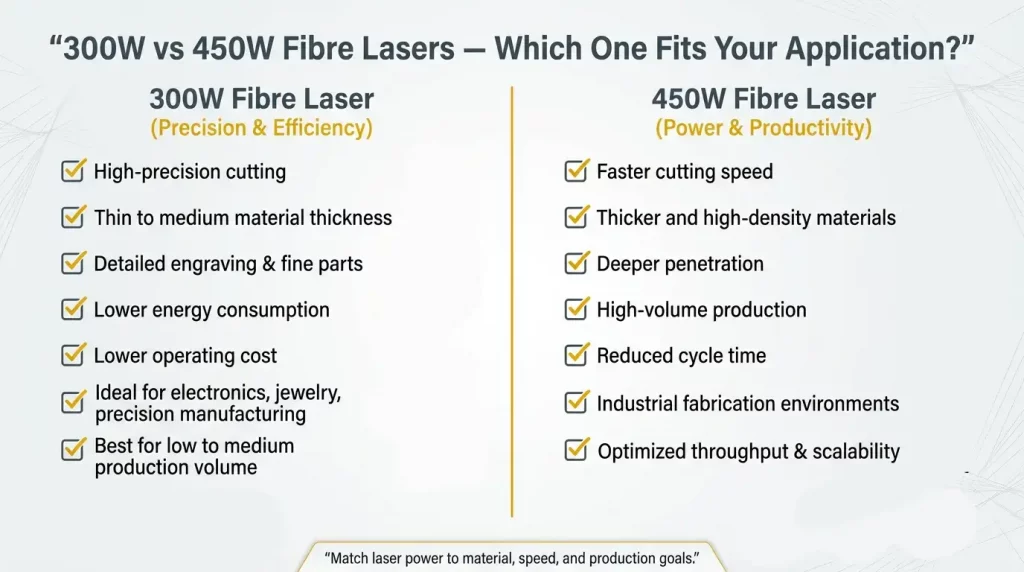
Fibre laser power is integral to determining a laser system’s capabilities, significantly affecting aspects such as cutting speed, material thickness, and production efficiency. A 300W laser is ideal for applications that necessitate precision, detailed engraving, and lower energy consumption, making it a strong contender for industries focusing on intricate tasks and precision manufacturing. Conversely, a 450W laser stands out in larger-scale, industrial settings where speed and the ability to handle thicker materials are prioritized, thus maximizing productivity and ensuring cost-effective operations. These choices should be guided by an understanding of the specific needs of the application, highlighting the importance of choosing the right laser wattage.
The Role of Technological Advancements
Recent technological advancements have further diversified the potential applications and efficiencies of both 300W and 450W fibre lasers. Key developments such as improved cooling systems, automation, and enhanced beam quality have revolutionized operational effectiveness, providing consistent performance and reducing costs. Software enhancements also play a pivotal role in increasing the precision and flexibility of laser applications, aiding industries in optimizing their workflows and making informed, strategic decisions about the best wattage for fiber laser cutting.
Assessing Specific Project Demands
Choosing the correct laser power level involves more than just understanding current technological capabilities; it requires a thorough assessment of project-specific demands. Factors such as desired cut quality, speed, and material thickness should guide the decision-making process. For applications focused on lightweight and delicate material processing, investing in a 300W laser could be beneficial due to its lower initial and operational costs. On the other hand, projects with high-volume or robust material demands will benefit from the 450W laser, thanks to its increased power and cutting speed, which optimize production timelines and enhance throughput.
Conclusion and Final Thought
Ultimately, choosing between a 300W and a 450W fibre laser should be a deliberate decision that aligns with both immediate project needs and overarching strategic objectives. By evaluating the nuances of each power level and the specific demands of the applications, manufacturers can ensure they are making well-informed investments that will enhance efficiency and cost-effectiveness. As you make your choice, consider leveraging our industry resources to further understand how these advances play into the broader spectrum of industrial applications.
As the landscape of fibre laser technology continues to evolve, staying informed of ongoing technological advancements and adapting your strategies accordingly will be key to maintaining a competitive edge. Therefore, let your decision frameworks consider not just current capabilities but also future trends, ensuring your production processes are both agile and robust, meeting the demands of tomorrow’s industrial challenges.